Local Schema For Auto Repair Shops
By The Digital Diva Group Editorial Team · Updated 2026-07-26
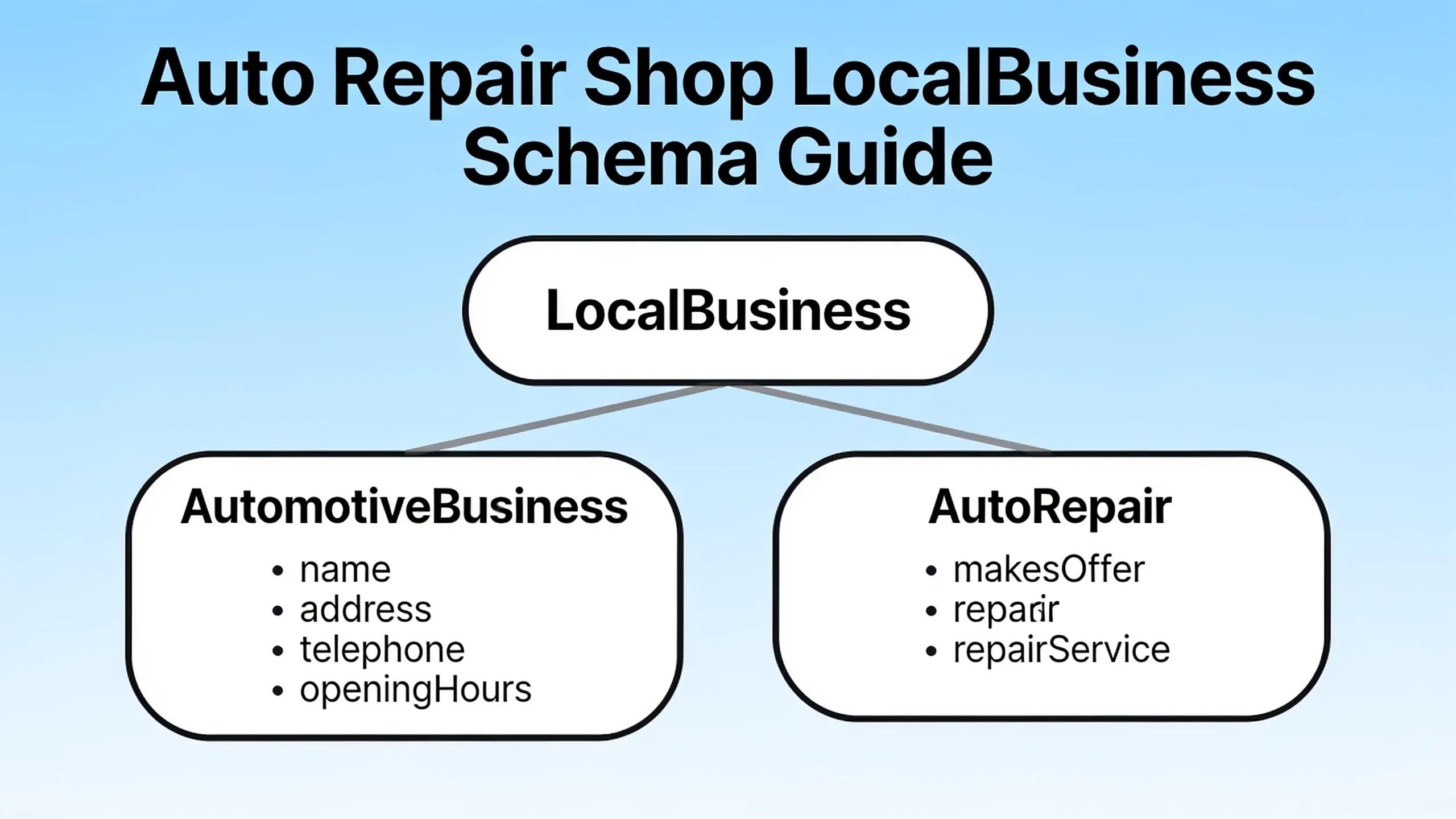
Schema.org's AutoRepair markup enables local auto shops to display essential details—business name, address, phone number, hours, and services—directly in Google search results. Implementing LocalBusiness and AutoRepair JSON-LD structured code improves local SEO rankings, boosts click-through rates, and helps shops appear in Google's Local Pack and Map results for nearby searches.
AutoRepair schema markup uses the LocalBusiness type with AutomotiveBusiness or AutoRepair subtypes, structuring address, openingHours, currenciesAccepted, services. Reviews as JSON-LD so search engines display accurate location. Service details for queries like "auto AC repair near me" in Google Maps and knowledge panels.
Schema.org's AutoRepair type gives shops a structured data framework built specifically for the industry, extending standard LocalBusiness properties like currenciesAccepted and openingHours. Auto repair shops that deploy AutoRepair schema, instead of generic LocalBusiness markup, hand search engines precise service, pricing, and hours data—fueling stronger local pack rankings. Sharper visibility across Google and AI-driven search results.
Key Takeaways
Schema markup structures data so search engines display location, hours, reviews, and services prominently.
Local schema helps auto repair shops rank in "near me" searches by providing geographic specificity.
Implementing AutoRepair schema with currency formats like USD improves search visibility for service departments.
Proper schema markup controls brand narrative and dramatically enhances user experience for potential customers.
What Do You Need Before Adding Auto Repair Schema?
Success starts with raw data, not code. Shop owners must pull together every operational detail before touching a single line of JSON-LD. Skip this step, and Google Maps, knowledge panels, and local results stay out of reach. Because generic local schema for auto repair businesses only works when the underlying facts are accurate and complete.
What information should a shop gather first?
Gather hours, service lists, accepted payment methods, and customer ratings before writing anything. Structured data lives or dies on these details. A spreadsheet with clean, consistent fields converts far more smoothly into machine-readable markup.
Why can't plain-text hours do the job?
Plain text tells human visitors "Open weekdays 8am–6pm," but search engines can't parse that sentence on their own. This gap defines true structured data search intent — engines need explicit, tagged fields to recognize hours, not paragraphs.
Before coding, confirm these essentials:
Business type: AutomotiveBusiness or the more specific AutoRepair subtype
Weekly hours formatted for the openingHours property
Complete service and payment-method lists
Current customer ratings
Nail these down first. Everything else builds on this foundation.
How Do You Build AutoRepair Schema Step By Step?
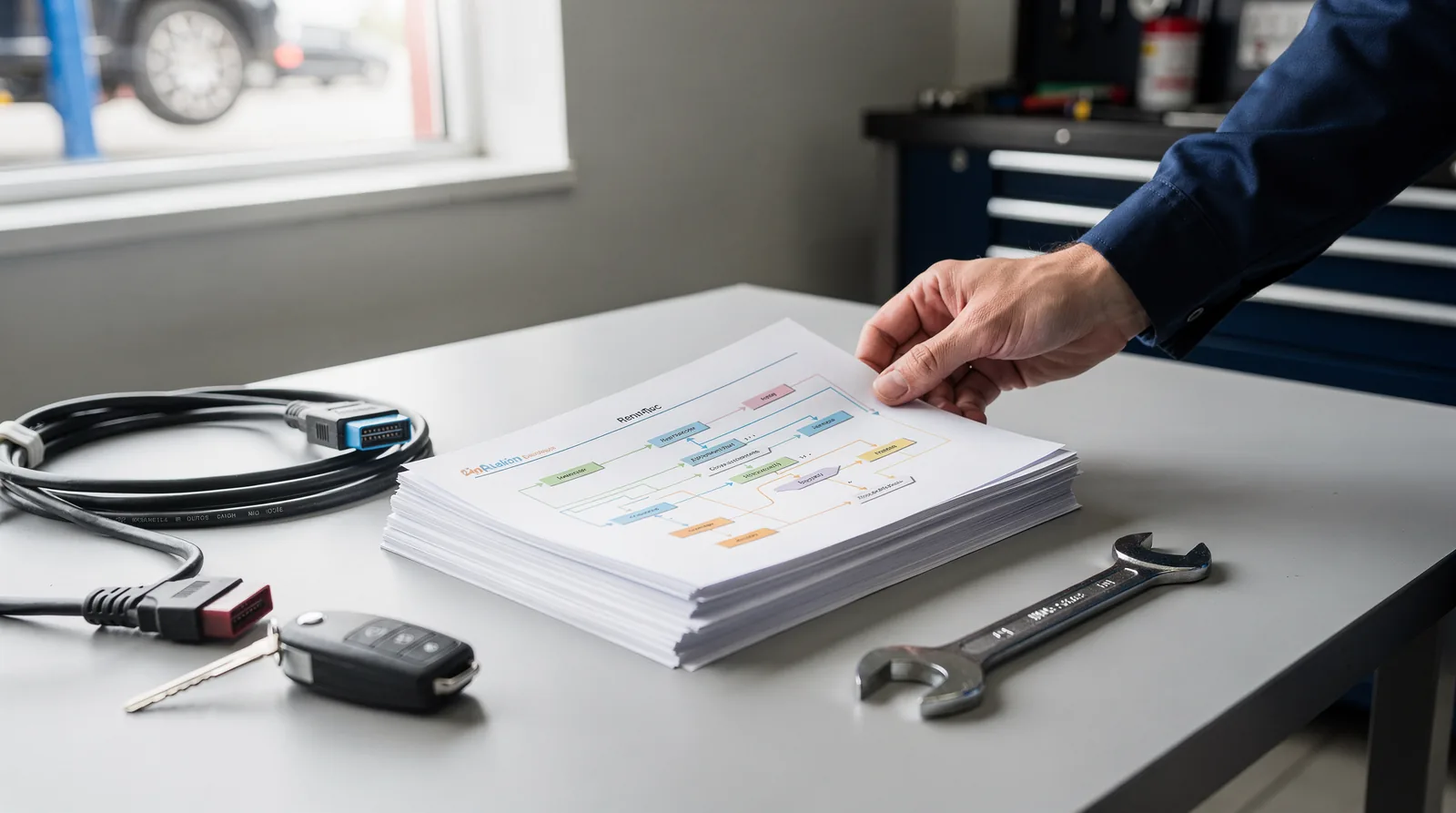
Building AutoRepair schema starts with a clear map of the shop's core facts, then layers in the specific properties Google expects from an automotive listing. Shop owners who skip straight to generic LocalBusiness code miss the properties that separate a mechanic from a bakery in search engines' eyes. The result: fewer rich results, weaker visibility, and a listing that blends into the noise.
Before writing any code, marketing managers should gather the shop's name, address, hours, service list, and accepted currencies. This groundwork defines structured data intent (structured-data-intent-ddg102). The goal of telling search engines precisely who the business is, what it repairs, and where customers find it.
Choose the AutoRepair type instead of a generic Store or LocalBusiness tag; this signals the automotive category directly.
Populate name, address, phone, and openingHours fields with exact, current shop data.
Add currenciesAccepted using a standard ISO 4217 code, such as USD, since this property is required for the type.
List priceRange and services offered, from brake jobs to AC repair, so search engines match the shop to specific queries.
Validate the JSON-LD with a schema testing tool before publishing.
What makes good auto repair schema examples?
Strong local schema for auto repair shops always pairs accurate NAP data with service-specific properties like currenciesAccepted and openingHours. Weak examples copy a template without customizing service lists or floor-level detail for multi-bay shops.
Developers building auto repair schema examples (auto-repair-schema-examples-ddg103) should treat schema as a structured data framework, not a one-time checkbox. Well-built markup enables rich results that often boost visibility and click-through rate, though results vary by site and implementation quality.
What Mistakes Sink Your Auto Repair Schema Results?
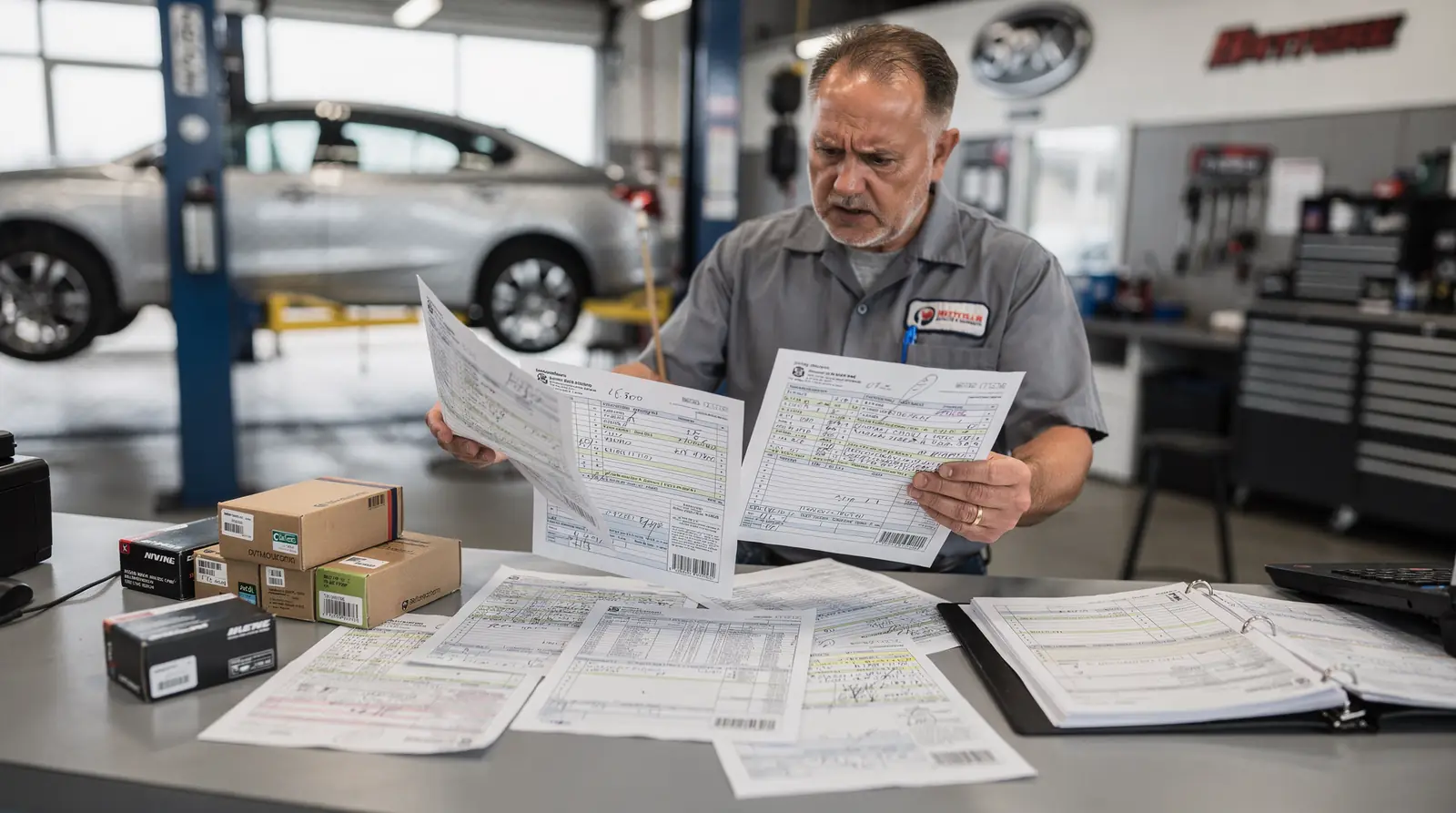
Fragmented listings wreck schema performance before a single line of code gets written. Countless shops scatter address, hours, and service details across dozens of directories without unified local schema for auto repair shops, blocking knowledge graph inclusion and shutting out local search features entirely.
That fragmentation costs real customers. A shop that fails to surface in top results with location, reviews, hours, or services simply disappears. That driver never calls, never books, never shows up.
Why does mismatched search intent kill visibility?
Search queries get hyper-specific fast. A driver typing "auto AC repair near me" in a named city expects schema that mirrors that exact service and location. Generic markup that ignores structured data matching search intent loses that match entirely.
What manual errors show up in real schema builds?
Multi-location shops hand-coding hours, service areas, payment methods, and ratings invite mistakes constantly. Reviewing solid auto repair schema examples exposes the usual culprits:
Inconsistent hours across locations
Missing or outdated payment method fields
Incomplete or stale aggregate ratings
Service-area boundaries that don't match real coverage
Schema markup transforms your auto repair shop from invisible to unstoppable in local search. You've got the roadmap—implement it now and watch your visibility explode. Customers searching for trusted mechanics in your area will find YOU first. Stop leaving rankings on the table. Lock in your local dominance today. Schema markup isn't optional anymore—it's your competitive edge. Deploy it. Own your market. Drive results.
FAQ
What is AutoRepair schema markup?
AutoRepair schema markup is a Schema.org type that extends LocalBusiness, structuring address, openingHours, currenciesAccepted, services, and reviews as JSON-LD so search engines display accurate details for local searches.
What information do shops need before adding schema?
Shops need business type (AutomotiveBusiness or AutoRepair), weekly hours formatted for openingHours, complete service and payment-method lists, and current customer ratings gathered in a clean spreadsheet.
Why does AutoRepair schema work better than generic LocalBusiness markup?
AutoRepair schema signals the automotive category directly and hands search engines precise service, pricing, and hours data, fueling stronger local pack rankings and sharper visibility across Google and AI-driven search results.